
Many people sit with a drinking problem for months — sometimes years — before deciding to do something about it. And one of the biggest reasons they wait isn’t denial. It’s the job.
What if my manager finds out? What if I lose my position? What if I come back and everything’s different?
Those fears are understandable. They’re also, in many cases, legally manageable — which is something most people don’t know when they’re quietly Googling this at 11pm, dreading Monday morning. Going to rehab will not automatically cost you your job.
Federal law — specifically the Family and Medical Leave Act (FMLA) and the Americans with Disabilities Act (ADA) — creates a legal framework that, when you qualify, protects employees who seek medical treatment for substance use disorders. Alcohol detox is a medical event, not a career confession.
Quick Answer: Most employees have some level of privacy and leave protection when seeking addiction treatment, but the exact protections depend on your specific situation — employer size, length of employment, and how you structure the leave request. Confirming your eligibility with HR or a legal professional before you go is always the smarter move.
When asking will going to rehab affect my job, it helps to separate legal protections from the realities of the workplace. While laws may provide certain protections, managers, schedules, and workplace dynamics can still create understandable concerns, especially because stigma around addiction remains a factor.
If you’re considering alcohol detox near you and worries about your job are holding you back, this guide explains what the law says, what information your employer may actually need, and how many people navigate treatment while protecting their careers.
Is Your Treatment Confidential From Your Employer?

Short answer: your boss doesn’t automatically get a report card on your medical choices.
When asking is rehab confidential from employer, it’s important to understand that medical leave requests are typically handled through HR rather than directly through your supervisor. This separation helps protect your privacy, as HR generally manages medical documentation and does not share specific health details with managers or coworkers who do not need that information.
HIPAA adds another layer, restricting how healthcare providers share your information without your written consent. Your rehab center, your doctor, your therapist — none of them are calling your employer.
What HR does know is that you need medical leave and for approximately how long. That’s the operational information they actually need. Your diagnosis, your treatment plan, whether you’re dealing with alcohol withdrawal or anything else — that’s not something your manager is legally entitled to access.
According to HR professionals and rehab privacy advocates, medical certifications submitted for leave approval are confidential by design, specifically to prevent this kind of disclosure from filtering through the organization.
The anxiety here usually comes from one source: people imagine they’ll have to walk into their supervisor’s office and explain everything. In reality, most of the conversation happens between you and HR — and even then, you’re sharing far less than you think.
What Information Might Your Employer Actually Need?
| What Employers Typically Need | What Employers Don’t Need |
| Dates of your absence | Your specific diagnosis |
| Confirmation of a serious medical condition (via provider form) | The name of your treatment facility |
| Estimated return-to-work date | Details of your treatment plan |
| Medical certification from a licensed provider | Whether the condition involves substance use |
The line between “sharing a medical need” and “disclosing your entire personal history” is one worth holding firmly. You can confirm you have a serious health condition requiring treatment without ever saying the word “alcohol.”
FMLA and Medical Leave Basics
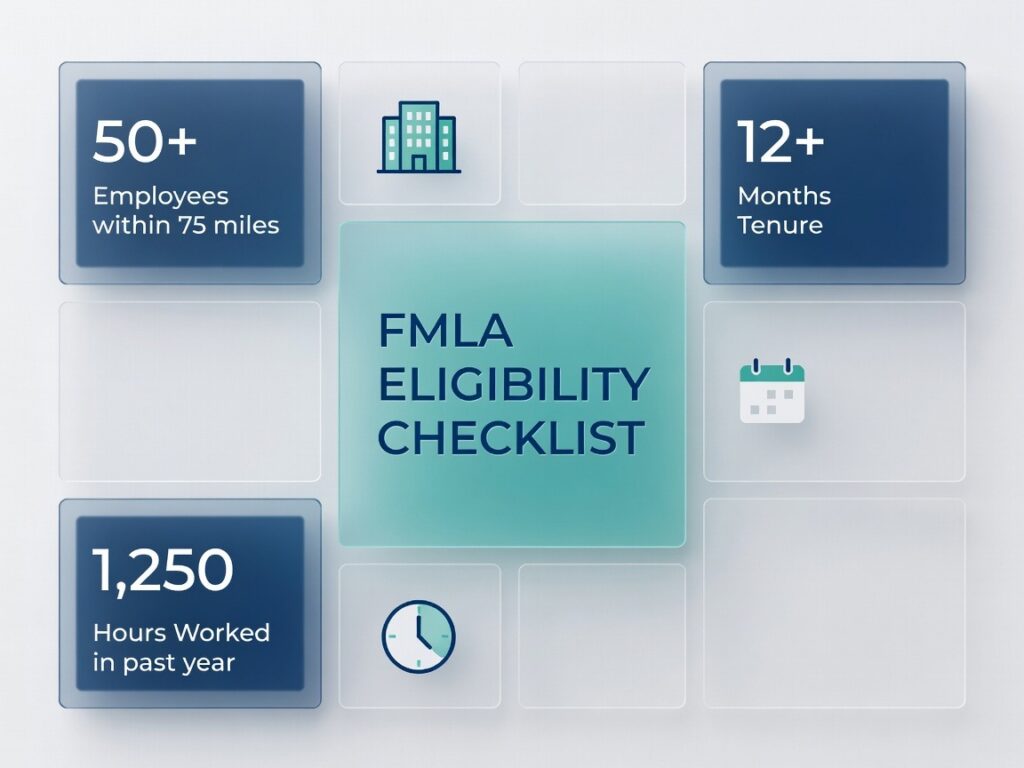
The Family and Medical Leave Act is a federal law that allows eligible employees to take up to 12 weeks of unpaid, job-protected leave per year for qualifying medical conditions — including addiction treatment, when it meets certain requirements. According to the Department of Labor’s official FMLA guidance, treatment for substance use disorder provided by a healthcare professional qualifies as a “serious health condition” under the act.
FMLA for alcohol detox can provide important protections for eligible employees seeking treatment. A properly structured leave for alcohol detox and rehabilitation may fall under the same legal framework as other serious medical conditions, including surgery, cancer treatment, or significant mental health care.
The key distinction is that the law protects the act of seeking medically necessary care—not the actions or circumstances that led someone to need treatment. Understanding this difference can help employees approach the process with clearer expectations.
Eligibility isn’t guaranteed either. You must work for an employer with at least 50 employees within 75 miles, have worked there for at least 12 months, and have logged at least 1,250 hours in the past year. Miss any one of those thresholds, and federal FMLA doesn’t apply — though some states have their own expanded leave laws worth checking. Researchers at the Center for Public Health Law Research have documented how smaller employers and part-time workers face real structural gaps in FMLA coverage, which is why understanding your specific situation matters so much.
Questions to Ask About FMLA Before You Start Detox
- Am I eligible based on my employer’s size, my tenure, and hours worked?
- What documentation does my employer require, and who receives it?
- Does my state have leave protections that expand on federal FMLA?
- Will this leave be paid, unpaid, or offset by short-term disability?
- How do I structure the request to keep medical details appropriately private?
Getting these answered before requesting FMLA leave — not after you’re already in treatment — is how you protect yourself.
ADA Protections Explained

The Americans with Disabilities Act operates on a different track than FMLA but is just as relevant here. The ADA National Network is clear: individuals in recovery from substance use disorders, or those currently undergoing supervised rehabilitation, are protected from workplace discrimination. Employers cannot fire, demote, or refuse to accommodate someone simply because they have a history of addiction, as long as that person is no longer actively misusing substances.
The critical boundary the disabilities act draws is between past or supervised use and current illegal drug use. Someone actively showing up impaired? Not protected. Someone who has entered a treatment program, or who is in recovery? That’s a different story, and the law reflects it. Alcohol use disorder specifically often qualifies as a protected disability under the ADA, which means employers may have a legal obligation to consider reasonable accommodations — adjusted schedules, modified duties during an outpatient phase, things like that.
Why Legal Details Matter
These ADA protections are situation-specific. State laws, company size, the nature of your role, and how your employer interprets “reasonable accommodation” all factor in. The EEOC guidance on ADA and disability offers the official framework, but applying it to your specific circumstances is where professional legal advice becomes genuinely useful rather than optional.
This article provides general information, not legal advice. For questions about your specific employment situation, consult an employment attorney or HR professional.
PTO, Medical Leave, and What Actually Makes Sense
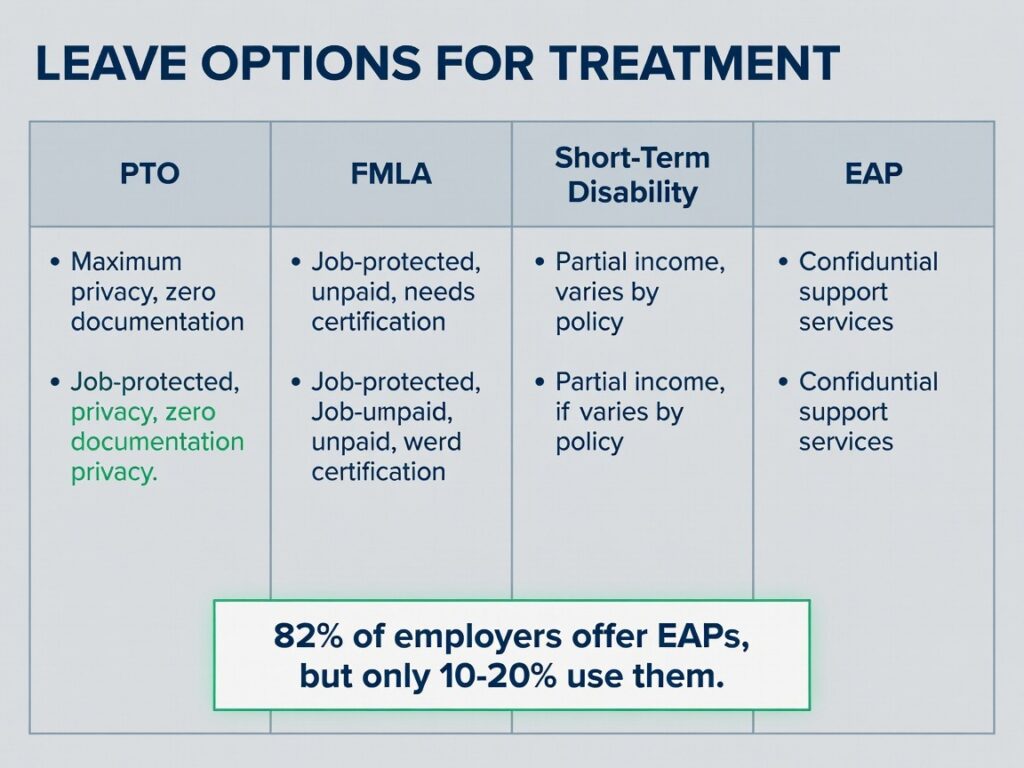
Not everyone will qualify for FMLA — and even those who do have other options worth thinking through before automatically assuming medical leave is the only path.
- Paid Time Off (PTO): Maximum privacy, zero documentation, no need to explain anything. Works well for shorter detox stays or outpatient programs where you need a few days. The tradeoff is it burns your own accrued leave.
- FMLA medical leave: Job-protected and documented, but unpaid and requires medical certification. Most appropriate for longer inpatient stays where you need the formal legal protection.
- Short-term disability: Available through some employers, this can provide partial income replacement during a medical leave. Whether addiction treatment qualifies varies by policy — worth a direct call to your benefits department.
- Employee Assistance Programs (EAPs): Oddly underused. Recent data from 2026 shows that 82% of employers offer EAPs but only 10–20% of employees actually use them. These programs are confidential, and many can connect you with counseling resources, referrals to treatment, and guidance on navigating leave — all without involving your manager.
Planning which option to use ahead of time isn’t just logistically smarter. It also takes one massive variable off your plate when you’re already dealing with the physical and emotional weight of deciding to get help.
What You Do and Don’t Have to Disclose
People stress about this conversation far more than they need to — largely because they imagine it going wrong. The honest reality is that what you say to your manager versus what you put on paper for HR are two very different conversations.
You do not have to tell your supervisor you’re going to alcohol rehab. You don’t have to use the word “addiction” at all. What you need to communicate, at a practical level, is that you have a medical situation requiring time away, the approximate duration, and who will cover your responsibilities while you’re gone. That’s a version of a conversation that happens all the time for all kinds of medical reasons, and it doesn’t require a personal confession.
Preparing What to Say
When talking to HR, keep it functional rather than biographical. Something like: “I have a medical condition that requires treatment and I’d like to understand the process for requesting medical leave.” Let HR walk you through the paperwork. The medical certification your provider fills out contains the clinical detail — it doesn’t need to come out of your mouth in a conference room. Practical guides on FMLA paperwork consistently recommend this approach because it protects you while still moving the process forward.
Outpatient Options That May Work Around Your Schedule
Not everyone who needs help with alcohol requires inpatient addiction treatment. Intensive outpatient programs (IOPs) and partial hospitalization programs (PHPs) are legitimate clinical pathways that allow people to attend structured therapy — sometimes several hours a day — while continuing to work, at least partially. If a clinical assessment determines that your withdrawal risk is manageable medically, an outpatient alcohol rehab program can be a realistic option that minimizes the career disruption you’re dreading.
I suspect a lot of people land on outpatient not because it’s clinically ideal, but because it feels less “visible.” That’s understandable. But the decision about what level of care you actually need should be made by a health care provider assessing your specific history, not by what your work schedule can accommodate.
Understanding the difference between inpatient vs. outpatient alcohol detox is genuinely useful before you make that call, because alcohol withdrawal specifically can escalate to seizures or worse without proper medical supervision. Safety before scheduling. Always.
Getting Help Without Derailing Your Career
Here’s something that gets buried under all the legal logistics: untreated alcohol use disorder is a far more reliable career-killer than going to treatment. The gradual performance erosion, the missed deadlines, the interpersonal fallout — healthcare advocates consistently point out that the trajectory of untreated addiction almost always ends worse than the temporary disruption of getting help. That’s not a moral argument. It’s a practical one.
People return to work after treatment all the time — in Lancaster, York, Harrisburg, Hershey, Reading, Lebanon, and everywhere else. They negotiate leave, protect their privacy, and come back with their positions intact. What makes it go well is usually some combination of: knowing your rights before you go, keeping the employment conversation at the appropriate level of detail, and working with a clinical team that understands how to structure treatment around real-world responsibilities.
Recovery can genuinely improve your long-term stability, both professionally and personally. The question isn’t whether getting help will affect your job. The question is whether not getting help will.
Kora Behavioral Health alcohol detox can help you explore how treatment may fit around your work responsibilities. Talk confidentially about your options by calling (866) 861-9667 — the team is available to answer questions without judgment and without pressure.
FAQs
Will my employer find out if I go to detox?
Not automatically. Employers don’t receive notifications from treatment centers — HIPAA protects your medical information at the provider level. If you’re requesting FMLA leave, medical certification goes to HR, not your supervisor, and HR is bound by confidentiality obligations that prevent sharing your diagnosis or treatment details with others in your organization. You control what you say and to whom. That said, the process still requires some communication with HR around dates and documentation, so understanding those steps before you go protects you from unexpected gaps.
Does FMLA cover alcohol detox?
It can. The Department of Labor recognizes substance use disorder treatment provided by a licensed healthcare professional as a qualifying “serious health condition” under FMLA. But eligibility depends on your specific employer size (50+ employees within 75 miles), your tenure (12 months minimum), and hours worked (1,250 in the past year). If you meet those thresholds and have a medical provider certifying the treatment, requesting FMLA leave for alcohol detox is a legally recognized option. Confirm your situation with HR or consult an employment attorney for your specific circumstances.
Can I be fired for going to rehab?
Going to rehab is not, on its own, legal grounds for termination. The ADA and FMLA together create protections for employees seeking treatment for substance use disorders, and legal analysis from employment experts is consistent on this: employers cannot lawfully terminate an employee simply for entering a rehabilitation program. What employers can act on is documented job performance issues — absences, misconduct, productivity failures — that occurred independent of the treatment decision. The cleaner your record going in, the stronger your position coming out.